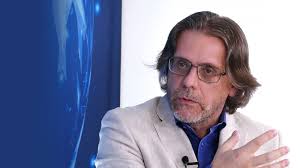
 Páleš named the hypothesis about certain periods in history “angelology” because it is based on the seven angels written about in the Bible, in the Book of Revelation. Thus, Páleš’s theory is not some independent and impartial theory, but primarily a Christian theory.
And Christianity is hidden Satanism – therefore, Páleš’s pro-Christian bias is by no means something to be praised.
Páleš also deals with historical periods (repetitions) in history. So far, no historian has expressed an opinion on Páleš. And I doubt that his speculations would stand up before historians, who, moreover, consider him such an obscurantist that they don’t even see the point in verifying the truthfulness of his view on history.
Páleš uncritically connects certain objects with symbols: e.g., that the heart is related to cancer – such things are ordinary uncritical esoteric babble that will never stand up before a person with common sense. Similarly, he connects historical periods with certain symbols.
The controversial Páleš often boasts about predicting that the sunflower treats AIDS, because after he predicted a connection between the sunflower and AIDS, scientists discovered some sunflower extract that can partially treat AIDS.
Páleš comes from the communist generation, when his spiritual “sciences” were strongly suppressed. After the liberation in ’89, he threw himself fanatically into an overly “spiritualized” uncritical pseudoscience and has stuck to it until today.
On his own website, Páleš even has statements from his ideological opponents. I must admit that his opponents clearly won the argument.
Páleš also defends his theories using mathematical statistical correlation. But the fact that it somewhat “fits” and “clicks” is just mere coincidence. The fact that two very simple curves run approximately alongside each other means nothing. Given Páleš’s level of criticality, everything would have to correlate with everything.
And even if angelology were really true, what would we get out of it? What does such a philosophy bring to the ordinary person? Is it perhaps good advice for life? Páleš’s philosophizing is just philosophizing over the immortality of a maybug.
Páleš organizes some courses, which somewhat resemble a closed sect where Páleš is the boss/guru and his students are obedient uncritical sheep. Mr. Páleš should open up to the public a bit; those closed private courses do not make a good impression on me. Also, Páleš’s sheep in internet discussions cannot tolerate any criticism of their shepherd. It reminds me of how Catholic fanatics cannot tolerate criticism of their Holy Catholic Infallible Church.
It is fine that Mr. Páleš uses a lot of mathematics in his “research.” But great mathematics is no guarantee of truth – the calculation itself may be correct, but we cannot apply mathematics to nonsense. If mathematics is used to calculate nonsense, it is worthless.
I think Páleš has already realized that his philosophizing is nonsense. But once a person declares their philosophizing as “infallible truths” before the public, it is hard to retract it.
Specifically, I reproach Páleš for this: his angelology is, as far as I know, a repetition of certain periodic intervals, according to which we could roughly estimate the future. I think he has a tiny, tiny shred of truth; there is surely something to these periods, but that’s all. When a person strongly, persistently, and above all UNCRITICALLY looks for evidence for their theory, they will find it, and sometimes it can seem very logical and correct even to the creator of such a theory. Serious theories are compiled by several people with multiple differing opinions; there are always supporters and opponents of a given theory. That’s how it works in modern physics as a science. An official theory is declared only after long discussions and rigorous skeptical testing. Since Mr. Páleš created the theory himself, there was no one to express a skeptical opinion, and therefore its objectivity is questionable (I personally have discussed opinions even with staunch opponents – professors of theology). Overall, I think Páleš’s historical periods are a dead end: his theory is just a kind of patchwork of several good coincidences. In reality, the development of humanity is unpredictable, and it is not possible to speak reliably about periods.
Páleš also published a statement on his website by a competent expert, Ladislav Hohoš, on the history of philosophy, who labeled his work as philosophical speculation belonging to the category of “mysticism,” marking it as something extra-scientific. Páleš, however, claims the label “scientific” for his speculations.
I HAVE A FEELING THAT REGARDING HISTORY, PÁLEŠ CHOSE ONLY WHAT SUITED HIS THEORY, WHILE IGNORING HISTORICAL EVENTS THAT DID NOT FIT.
I’m not saying Mr. Páleš couldn’t be right about anything; occasionally he surely is right about something. Páleš certainly strives for seriousness and tries very hard for the truth, but in reality, his work is on bad foundations, and if we are on bad foundations, we will not reach the truth. I would recommend Mr. Páleš turn his intellectual potential in a completely different direction: to abandon his bad foundations and start devoting his energy to serious philosophy on good foundations.
It is also embarrassing how much hatred Mr. Páleš has for his ideological opponents!!! In the following article, Páleš talks about his discussion with the professional public (the article is actually his monologue). This article is nothing more than taking things out of context from what his opponents said, with practically no literal quoting of opponents; the whole article is filled with hatred toward them. At the end, he spitefully mocks the collapse of the Slovak Skeptics Club. Well, poor Mr. Páleš ran out of arguments, so he was left only with room for such a disgrace http://www.sophia.sk/sites/default/files/Sisyfos_proti_vede.pdf
November 10, 2014, update: In the last two broadcasts on Slobodný vysielač, Mr. Páleš spoke practically only about himself, which was immensely egocentric, narcissistic, and embarrassing. In the programs, he constantly defended himself against his critics. The funniest part was that Páleš said that in the search for truth, discussion is necessary. But when the host asked him if he would be willing to discuss with anyone, he replied that he is not willing – it turned out how cowardly Páleš is and that although he speaks about the need for discussion, he himself does not know how to discuss. Páleš preaches water and drinks wine. With these last two broadcasts of Adriana’s Thread, Mr. Páleš has completely finished himself off.
*****************
Emil Páleš draws his basic philosophy mainly from Rudolf Steiner. However, there is verified information (feel free to verify it for yourself) that Rudolf Steiner was a member of the Thule Society, of which Adolf Hitler was also a member. Furthermore, Steiner and Hitler were good friends and associates. So who is Emil Páleš, who draws his philosophy from a friend of Hitler and a member of the black-magic Thule Society?