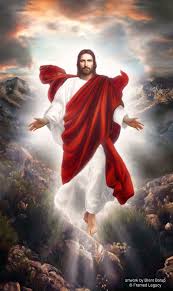
 History: what kind of Christ did the first Christians believe in?
Christians believe in the infallibility and perfection of the church. Catholics believe that the church is pure truth. Christians believe in the Holy Church of God, which always tells them the truth. But the historical facts themselves say that the church has not only not told the truth to its sheep for centuries, but even that the church is based on lies from its very foundations. But this article will open the eyes of a Christian. The fact that in the past the church did not believe in the Divinity of Christ is an absolutely crushing fact for a Christian. This article will force every Christian to abandon their church faith. Some Christians (especially practicing and fanatical ones) may even psychologically collapse from this article, fall into depression or it may even "defeat" them. A Christian based his entire meaning of life on Christianity, but now here is an unpleasant article that calls his entire faith into question. The article will spoil the joy of a Christian. Christians do not like to read such articles and are often unable to finish them. The truth is sometimes unpleasant. But even unpleasant truth moves us forward. What good is the crazy rampage of fanatical Christian preachers, evangelists, who are trying by force to bring as many sheep as possible to Christianity, which is already based on lies in its foundations? After all, Christianity is questioned by its own history.
Don't be fooled by the church! Use your own sense!
Until 325, there were only two types of Christians: Arians and Gnostics . Both Christian movements had in common that they believed in the equality of Jesus and believers, but in two ways:
– the Arians had a more or less Jewish faith and saw Jesus as an ordinary man who had the Holy Spirit. The "Arian" faith existed long before Bishop Arius, it is called, for example, adoptionism
– Gnostics believed in a philosophy that was very close to Eastern religions in many ways. They believed in Christ as the son of God, but an ordinary believer could become exactly the same son of God as Jesus. Gnosis means knowledge, they considered spiritual knowledge and wisdom to be important. Unlike the Arians, they believed in the necessity of spiritual enlightenment-resurrection already here on earth.
There were also considerable disputes between the Gnostics and the Arians, who believed in spiritual happiness-resurrection only after death.
Until 325, there was no idea that Jesus was God. And I'm not kidding, there is evidence for this, the facts speak clearly. Namely, before 325, there is no theological writing by any Christian author that would not contain either Arian or Gnostic theology. There is not a single Christian figure known who would declare that Jesus is God. From several dozen theologians, I will choose at least some:
-martyr, Saint Justin , lived from 100-165, his rich writings have been preserved, he believed in a radical Arian theology. Paradoxically, he is still highly respected as a holy martyr in the Catholic Church
– Tertullian 160 – 225, his rich writings have also been preserved, he also did not believe in Christ as God, he believed in the equality of Christ and people
– theologian Origen (185 – 254) believed in Arian theology. Considered one of the most important theologians in the Catholic Church
-Saint Clement of Alexandria (150 – 215), was a Gnostic, his theological extensive Gnostic works have been preserved to this day and it is possible to buy them in Czech translation. For example, the very clearly Gnostic work of Stromat
The Catholic Church declared Justin a saint, who said that conception from the Holy Spirit was a pagan invention, meaning he clearly considered Jesus to be a man, not God.
The Catholic Church also declared Clement of Alexandria, who was a Gnostic, a saint.
These are really very paradoxical facts: why did the church declare saints the so-called heretics who denied the Divinity of Christ? In my opinion, it was because of necessity. If all theologians before 325 were heretics according to the church, it could not declare anyone from the early church a saint, and that would have been very strange and suspicious to people. Therefore, the church had to act and declare someone from among those "heretics" a saint.
Summary, conclusion : It is a striking fact that until 325, Jesus was considered by Christians to be equal to men, that is, not God. This fact undoubtedly does not give sleep to prominent professors of theology, because they know about it, but they certainly hide it from their students. It is very negative that Christians are in great ignorance and do not know about this matter, although the Divinity of Christ is considered the most fundamental dogma of Christianity
History: since when was Christ considered God?
Jesus was considered God only from the year 325. In this year the Council of Nicaea took place, which was led by Emperor Constantine and without the participation of the Pope, which calls into question the credibility of the entire council. Historical sources manipulated by the Church do not tell us why the Pope was not present at the council. But it is definitely because the Pope and Constantine did not understand each other. And a lot can be hidden from us in this area.
After the Council of Nicea, Christianity was established as the official religion, but be careful not to do that!! The Church began to force the dogma of the Divinity of Christ on believers with violence and blood, a huge persecution of non-Christians began. We cannot imagine how much blood must have flowed then. The Roman army had to be exhausted like never before in history, because it had to kill huge masses of non-Christians, or at best severely punish them, mutilate them, and so on.